Tuesday, September 6, 2016

Should I take pictures at a ritual?

I do not take pictures at a shamanic ritual.  But what is a shamanic ritual?  Not the beautiful gatherings of people to celebrate those human moments of birth and joining together and passing away.  Nor the gatherings of spontaneous joy or sorrow about the conditions in our loves and lives that draw us to each other.


A shamanic ritual, as I learned from studying with Martin Prechtel, are those times when we gather to feed the Holy, to feed the good food of our effort to the other-than-human creatures in the alternate realities--the spirit world.


The Holy is Nature in all its guises.  If humans are present to receive our gifts, they are not humans who dance to the same rhythms as we do.


The Holy in nature do not eat the objects of our ritual actions.  They eat the effort it takes to make those ritual actions.  When we take pictures of the result of those actions--the altars and pipe ceremonies and spirit fires--we keep the energy, our effort, of that action from dispersing and therefore feeding the other side.  The camera makes frozen what should move.


Think of creating a beautiful feast.  We do not know the creatures who may come, or what their needs might exactly be, and so we make food from the art of song, dance and gesture that will nourish all beings.


But then in our innocence, or selfishness, we sit at the table ourselves.  We want the beautiful arrangement of stones, the soaring flames and curling smoke to feed our memory.  And so with a camera or cell phone we stop the feast from being eaten, from being metabolized by time into something useful that keeps the spirit world from starving.  


And we do not know who we have made hungry.  


When next you are at a ritual, ask yourself, "Who is this for?" Who is coming to eat this great feast of color and moment and sound?  Who, and what, has been invited?  If the gathering is not primarily for the humans, then offer your effort in a delicious eloquence of  dance and song, but keep the memories only only in your heart.


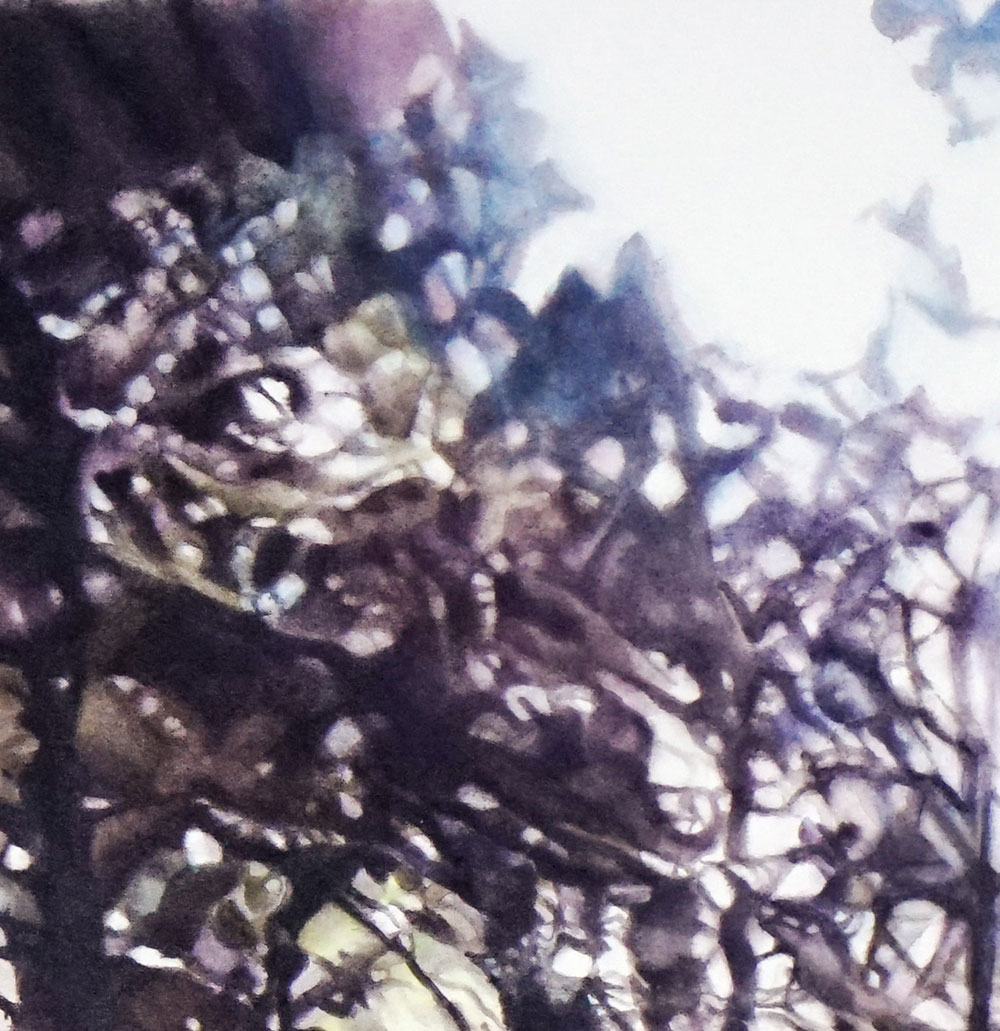
These art images are from my painted shamanic drums.  I hope you have enjoyed their view into those realities where we are meant to serve, and not to be, the guests of honor.


Tuesday, August 30, 2016

Talking to creatures in nature


Here are some tips for talking to creatures in nature.  I am illustrating this post with images from the Journey Oracle deck, not as an oracle reading but because these oracle card pictures capture the feelings I want my words to convey.


The first thing to know is that creatures in nature don't speak English. Or any other human system of sounds that symbolize concepts abstracted from the experience itself.  The difference between "Ouch!" and "That hurt."  All creatures feel and express Ouch. Only humans abstract that momentarily felt experience to a detached subject (that) and a general concept (hurt).

Therefore I talk with creatures in nature  by paying attention to the fit between my momentary felt experience and the beings, sounds or movements that are existing with that experience in its specific time and particular place.  Here is an example of what I mean.


Two days ago I was ready to build a new drum.  The hoop and cedar ring were prepared but the thawed hide was concerning me.  Portions of it were thicker than I remember; thicker than my notes indicated. I am reluctant to make a drum from a too thick hide as the resulting voice can sound muffled and be without the layered harmonics that many purchasers of my drums so value.  Yet a skin from an older deer has enough thickness so the drum does not loose its voice in damp outdoor conditions. So what is too thick?


At first I was in my head, talking to myself about how I could maybe trim the drum head, but decided this would unbalance the resulting stretch of the skin on the frame.  Then I was debating just throwing the skin away in case it made a failed drum.  Suddenly I realized I was not present in my body, nor quiet in my mind.  Certainly I was not in the specific time and particular place the drumskin and I were inhabiting.


I brought my eyes to soft focus, feeling the air still misted from a recent rain. I noticed, without focusing on anything specific, the greens and edges of autumn gold filling my view.  I brought my attention to inner awareness, closed my eyes, and felt the rhythm of my heart.  I began breathing consciously to slow my heart rate. I opened my eyes, gazed at the drum skin, and said from my inner awareness more than my brain, "Are you a good drum?"


Immediately I heard a Pileated Woodpecker drumming on a nearby tree. Tat-tat-tat-tat. Tat-tat-tat.
In some indigenous traditions the woodpecker is a sacred drummer, and is believed be connected to the heart beat rhythm of the Earth.  The woodpecker did not drum before I asked my question, nor did it continue after the two bursts of sound I heard. I felt the answer, "Yes.  This is a good drum."

Here are the tips contained in this story for talking to creatures in nature:
1. Be present in your body.
2. Be quiet in your mind.
3. Connect with your inner awareness.
4. Ask your question from this present, quiet, inner awareness.
5. Receive the answer from any being, sound, or movement that catches your attention.
6. Feel the truth of the answer.
7. Trust the guidance without giving in to skeptical doubt.
8. Keep practicing.  Just because something is simple doesn't mean it's easy.


Tuesday, August 23, 2016

How I paint Oracle cards

The 94 oracle card images of the Journey Oracle deck took me five years to paint because of the limitations I put on the way I created the pen and ink paintings.  I understood that the Oracle card images could not come from only my imagination, but just as importantly had to come from natural objects, because for me, the Oracle speaking in the cards is Nature in all her many guises.


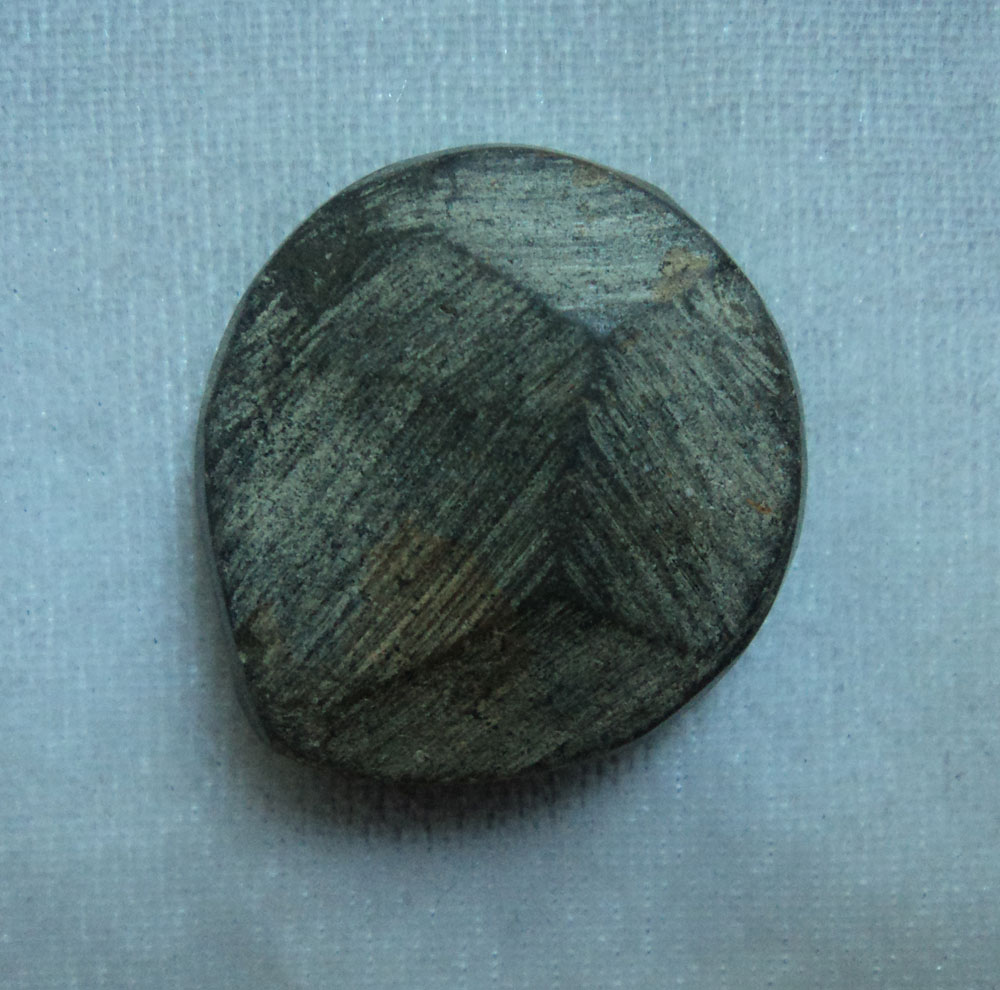
The first images came from gazing into disks of dried rawhide that were made from deerskin off-cuts when making a drum.  Just like when I paint my shamanic journey drums, I would gaze into the patterns of light and dark on the disk and lightly draw the image in India ink wash.


The little painting on rawhide became the new source for the pen and ink painting.  I limited my artistic preferences in two ways: every painting could only be done once (no do-overs); and I had to finish each painting once I had started it (no taking a break to consider how things were going).  This kept chance in control of the art, rather than my art school training.


Sometimes the image seen in the rawhide was severe and serious, with a chilling lack of softness in evidence.  Since the oracle cards were connected to the seasons of the year, the full moons, and the months of the calendar, such an image gave me pause to wonder if I had always misunderstood the energetic "signature" of it's time.


But when the pen and ink was applied to the 300 lb water color paper--without allowing time to stop or edit the painting--a very different energy emerged.


Because each oracle card had two different yet related sides, I turned the rawhide disk over and painted whatever version of the original drawing I could see from the back view.


After painting 35 of the oracle cards this way, I discovered some Brazilian agate in a rock shop.


The 6 oracle cards based on these slices of stone have quite a different energy.


This led me to look for something even more unexpected to complete the last 6 oracle card paintings. These polished amonite shells were just right.


The oracle images based on these spirals were truly inspiring.  It was easy to not discard any of my attempts to render their mystery and beauty.


But what of the reverse side?  The amonite shells were polished on one side, but rough cut and unfinished on the other.


True to my agreement with these beings of nature, I painted what I was shown.  And these oracle card paintings are possibly the most powerful of all.


So how did I paint the Journey Oracle cards?  By empowering chance to direct the source of the images, by allowing each image to be fully itself without my editing or judging its appropriateness or attractiveness, by working in one dream-like flow from start to finish. And most especially, I did what I was shown.

Monday, August 15, 2016

Painting a rawhide drum


Here are some visual lessons about several ways I find an image when painting a rawhide drum.  I begin with raw earth pigments from a company like www.earthpigments.com.  They have a good website with lots of instruction videos.  Choose a few basic colors to begin: black, brown, yellow, red, blue, green.  I use small inexpensive brushes from an art or hardware store. 


I spend many hours just gazing into the rawhide surface.  I am not trying to find anything so much as I am waiting for something to find me.  


Often I see eyes first.


  I usually start by painting the eyes of the creature.  I go very slowly, using only a tiny amount of color at a time because the picture is difficult to take back off the drum if I don't like where I am going with the image.  This is because the earth pigment mixes with the natural keratin in the deer skin and becomes like a tattoo. I wet the brush and touch it into the pigment on the jar lid, mixing a little of the color into the water.  This I touch onto a paper towel to wipe off most of the color before applying it to the drum head.


When I am all finished I close my eyes and rub with the flat of my hand, palm down, over the entire drum head.  This blurs and shifts and changes what I have done so now the image is coming from Mystery as well as my paintbrush.  


Sometimes I begin by just touching my dry brush into the pigment on the lid of the jar.  A very small amount.  I "dust" around the image I see in the drum like I was painting a faintly colored outline of the creature


I let the image "rest" on the drum for several hours or a day before going back to paint more. This is because I believe the creature is choosing to show me its face, body and mood and so I wait for it to adjust to what I have already painted before doing more.


Remarkable though it seems, almost none of this image of Cloud-Woman-Brings-the-Night is painted by me.  


Sometimes someone will tell me a story about the personal situation that is calling for them to have a drum.  This drum was very compelling to a woman who wanted me to paint it, and then told a story about an ancestor and an unexpected baby.  While I do not decide to paint a particular creature or scene before I start, sometimes a story will guide my eyes.


When I turned the drum head around so the bullet hole was in the lower left, I saw a baby quite clearly. 


A woman of peculiar proportion also emerged. Probably my hardest job when painting a rawhide drum is to not impose my preferences on the image.  You might say I am a secretary who is only noticed when she isn't doing her job. 


I saw a face above the bullet hole.


Defining the figure on the left with the color blue of the spirit world, and the figure on the right with the red of this world caused the two colors to join in the baby, and suddenly there was the story of a Grandmother bringing a child spirit to her Grand-daughter. 

When every part, and every part between the part is whole, I know I could not by myself have invented the elegance and simplicity of the rawhide drum painting.  


Each painted drum image is an oracle of meaning from another reality.  Just like the Journey Oracle cards create a journey into meaning by entering the inner reality of our unconscious wisdom.  But how these oracle cards were painted is another story.  


Thursday, August 4, 2016

Shamanic lessons from Nature painting


I started my artist’s life early in watercolor classes after school, and the flow of paint over paper enchants me still.  I see the magic everywhere without making it up anywhere.  


Every shape and tone and shade really existed at the moment I saw it in nature, so when I paint every part, and every part between the part, is whole. 


A “big” painting in acrylic on matte board takes me a year to complete.  An underpainting of Hooker’s Green and Prism Violet creates a foundation of detail.


Ten or more layers of complexly mixed colors are laid over this foundation, like building a symphony of color above the base notes. 


Broad washes of color tone the temperature and emotion to finish the work. 


Luther Burbank said; "Nature is an exacting mistress and a jealous teacher; she does not reveal herself wholly to the amateur or the dabbler, and she will not cooperate fully and generously with the man who takes her lessons or her work lightly."


Such is the shamanic lesson of a bank of ferns and brush beside a gravel road.  It asks of the student, "How do you like the Underworld?"