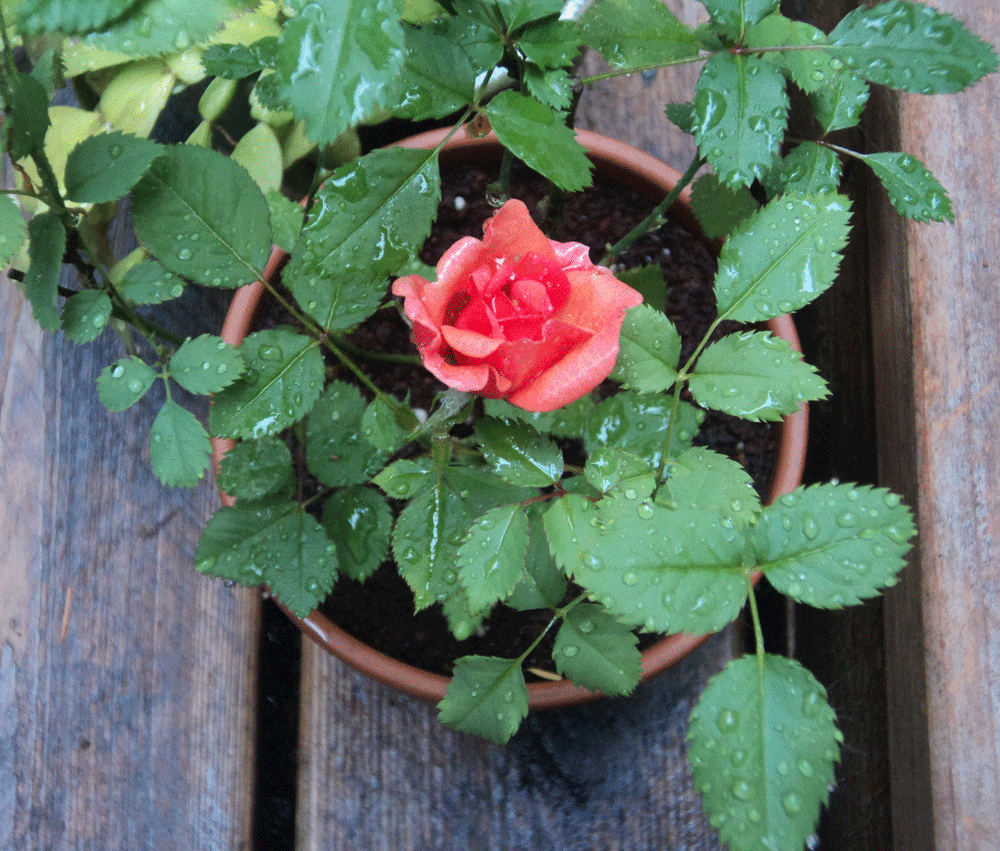
I hit a young deer two days ago. Because I have no photographs of this story, I am adding three images of making a gift of tobacco and breath to a tree. The lesson from the young deer feels as big as this tree.
I am driving home from a wedding--telling myself stories about how profound and beautiful it all was--and not paying attention. A young deer jumps from the roadside ditch and there I am--not paying attention. A solid thud and the deer is lying on the wet pavement in spasms of jerking movement. Surely it is dying.
Because this is Cortes Island and traffic is rare after the last ferry in the early still-bright evening, I stop my car in the middle of the road and move its young body into my lane away from anyone else coming. I sit on the pavement with him, holding his head in my palms so he will not die with his face against the asphalt, but he does not die.
We just sit there, this small animal with little swelling bumps where horns would have some day grown--and an old lady sad but not crying, not trying to do anything but be there. Several people drive by, each one asking what happened, what needs helping. I say we are fine. We don't need anything. By this time the young deer is watching me. I am thinking death is coming soon, and because I make drums I am wondering if I will be able to get the deer's body into the trunk of my car so at least my skill can serve his spirit with another form.
A young man passes by on a bike, gets off and joins us. He manages to carry the deer to the long wet grass by the side of the road so I can move my car in the darkening gloom. The young man, the deer and I stay together beside the road for what seems like quite a while--the humans crouched in the wet, the deer lying with legs outstretched and spasms of shivers running along its muscles. There is nothing obviously broken, certainly some scrapes and cuts but no blood and no bones showing. But I think the shock has been too much and now the deer's life is surely passing away in the subsiding tremors.
Someone stops and asks if we want a knife. I say to the young man,"Which would you rather choose? To die here in the cool wet grass in the fading light, or have your throat cut?" We decide none of us wants a knife. We become aware our petting the deer like a pet cat or dog is probably not being understood in the same way by this wild creature. First assaulted by an unimaginable thing, then moved twice and now held in place with alien smells and sounds and touch. The young man makes a hollow beside a hydro pole on the other side of the ditch and carries the now actively struggling young deer to it. The deer is lying in the bed with legs tucked under its belly and holding its head up.
Later at home I read about what I possibly should have done when I hit a deer. Yet in this one small instance I think what we all did was correct. The humans did not panic or try to fix anything so the deer could receive death, or life, in its own way. The next morning while driving slowly by I could not resist looking into the hollow place by the pole. I saw that it was empty.
Thursday, September 3, 2015
Tuesday, August 25, 2015
The Curator's Art, or How to Hang an Art Show
The 2015 Members Exhibition at the Old School House Gallery
on Cortes Island opened recently, and such a variety of work! Art pieces of every imaginable material and
scale and way of presentation are displayed across the walls, standing on
plinths, hanging from the ceiling. Yet
the overall impression of the exhibition is one of orderly flow accented with
surprise. The four coordinators: Lynn
Martilla, Caz Ratcliff, Oriane Lee Johnston, and Kathleen Horne did an excellent
job, and as a visual artist, it’s fun to examine their results for hints and techniques about how
to successfully hang a show.
The curator’s art materials are the individual art works,
and the compositions created with them become the curator’s art work. In this
way the entire gallery becomes a piece of art.
In the same way that a visual artist attends to the vocabulary of
composition—such as color, form and rhythm, the curator uses these same concepts
when arranging work.
Work can be arranged by color or pattern harmonies where all the pieces
relate as part of a similar color or texture family.
Arrangements can be by color temperature, where the similar intensity, or saturation, of various colors creates a particular mood.
An arrangement can also evoke an emotional mood, when the
juxtaposition of different pieces creates meaning not found in any one art
work.
Color and texture can be used to balance otherwise dissimilar
works because a small area of intense color or surface detail has the same visual
weight as a larger area of the same color or texture in a less dramatic version.
The curator can create closed compositions where the work is
limited by architectural edges or by visual boundaries using geometric shapes with
strong textures and forms.
Yet a curator needs to also relate compositions of art works
into larger groupings because the viewer moves throughout the gallery. These become open compositions where repeating
elements in adjoining areas create a visual rhythm.
Curating a show is like making art in another significant way.
This vocabulary of composition is mostly operating at a subliminal level. There probably isn’t much analyzing of
elements and spaces. The arrangement finally just feels correct. So the next time you are at the gallery, step
back from appreciating the individual pieces in exhibition, and also enjoy the
curator’s art.
Sunday, August 16, 2015
Make new art
I paint large photo-realist acrylic paintings, make native style frame drums, and teach about my Journey Oracle cards, but some of my most fun comes from always trying to make new art. New in every way: new materials, new techniques, new ideas for subjects and ways of working.
This watercolor work was continuously turned in a circle as I painted faces I saw in a stone. A wonderful example of how art changes with one's point of view.
Some of the most exciting, and dangerous, art I have made involved sealing drawings, found objects and extruded letters inside Plexiglas boxes.
This tiny extruded acrylic letter inspired a favorite phrase that I still use when writing my artist's statements: "I feel like a little hook reaching into mystery."
When I learned that throughout history artists have died from toxic fumes, I decided to put down the propane torch and chemical mask, and go for safer materials.
The drawing became beading on a loom, the wood became the frame, and the construction process itself became rain.
While this small acrylic painting seems to echo the painting I do on my frame drums with raw earth pigments, the new art here is the process itself. Lots of different kinds of mark-making materials were smeared around inside a cereal box. While this was drying a slip of paper was drawn from three different piles of nouns and verbs. A section of cereal box was copied and then embellished to become the image for the title made from the three words: Welcome to Swim House. Years later this is still one of the most enigmatic pieces I have ever painted.
Sometimes what makes new art is not doing anything new at all. This accidentally double exposure while on a camping trip became a symbol of Waiting for Apocalypse to me, made all the more potent
with the technology itself as the subject.
I think my favorite way to make new art is to transform something old and damaged into a new form.
This failed drum head became a pen and ink drawing, and then a raw earth pigment painting, and then was sewn inside a warped drum hoop which became filled with turkey feathers. Somewhere in the middle of this process I realized I was creating blood lines, and swimming sperm, and the egg of new beginnings.
Sunday, August 9, 2015
Why I don't pick flowers
My friend brought me a beautiful basket of dahlias today and when we took one outside instead of adding it in the vase, I told her the story of why I don't pick flowers. I love to receive flowers as gifts but years ago I had a terrible moment of not remembering something important, and not picking flowers is my way of saying "I'm remembering now".
We arrived outside at a deep hole in the ground where a tree had once stood but then rotted away. All around the hole I sprinkled the dahlia petals while saying "I remember this place, I remember I am feeding the beauty of this place."
Then I broke up the stem and the sepals and added these to the ground. I told my friend how I had learned from Martin Prechtel, when attending his school of spiritual ecology, that a tree hole like this is a most sacred connection between the worlds--a passage for the spirits on the other side; a place to honor the spirits of nature on this side. I also learned from Martin that there is no garbage. Nothing is without an origin on this earth. So I leave the petals and all the parts of the flower at this site whenever I can, instead of bring them into my house for me to enjoy. "But why" my friend asked.
Because years ago, we hired a man with a backhoe to dig our septic field. I forgot to mark out or cover over this sacred place in order to protect it, and since this area was immediately adjacent to where he was digging, of course he dumped the buckets of earth on top of the tree hole. It was buried under many feet of rocks and soil. It took months for me to remove the covering, and as I did, I understood to honor the place I forgot by giving the beauty of flowers to it instead of to me. Forever.
I tell this story in another way in the Journey Oracle cards and book in a fairy tale for card #18 called "Wanting More."
Sunday, August 2, 2015
Go to a summer craft market
There are craft and farmers' markets everywhere during these summer months. Cortes Island locations are hosts to three markets and the Journey Oracle cards can be found at the Farmers' Market at Manson's Landing, and at the Craft Market at the Gorge Harbour Marina.
The two settings could not be more different--a deep woodsy corner with bark mulch and fir cones for flooring in Manson's Landing, and a breezy lawn next to a pond at the Marina.
It is easy to think of not going on Market day morning--it takes more than an hour to set up the tent with sheer fabrics and display table.
And what if no one comes for a reading? The first few minutes can be uneasy and then I remember I am not at the market to sell things (well, maybe a little bit). Mostly I go to the summer markets because I am hoping the cards will help someone. Just because we are on vacation doesn't mean we have left our thoughts about difficult situations with family or work or health back at home.
It is very gratifying, and quite humbling, to have strangers be willing to sit in the other chair, and allow me to guide them into their unconscious wisdom by accessing a knowing that they never had to learn, and a remembering that they never had to experience. So go to a summer market, and while there, try something a little bit different. It might become a revelation.
Subscribe to:
Posts (Atom)