Monday, August 15, 2016

Painting a rawhide drum


Here are some visual lessons about several ways I find an image when painting a rawhide drum.  I begin with raw earth pigments from a company like www.earthpigments.com.  They have a good website with lots of instruction videos.  Choose a few basic colors to begin: black, brown, yellow, red, blue, green.  I use small inexpensive brushes from an art or hardware store. 


I spend many hours just gazing into the rawhide surface.  I am not trying to find anything so much as I am waiting for something to find me.  


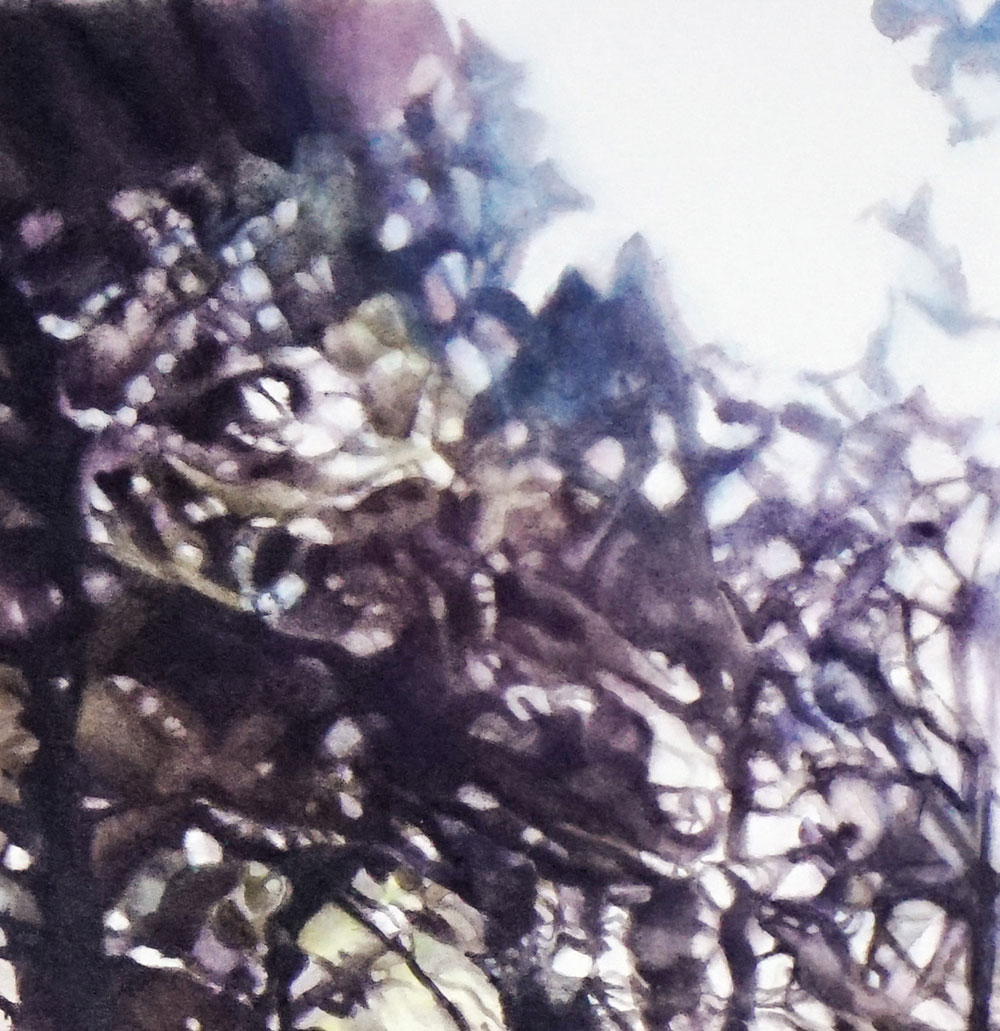
Often I see eyes first.


  I usually start by painting the eyes of the creature.  I go very slowly, using only a tiny amount of color at a time because the picture is difficult to take back off the drum if I don't like where I am going with the image.  This is because the earth pigment mixes with the natural keratin in the deer skin and becomes like a tattoo. I wet the brush and touch it into the pigment on the jar lid, mixing a little of the color into the water.  This I touch onto a paper towel to wipe off most of the color before applying it to the drum head.


When I am all finished I close my eyes and rub with the flat of my hand, palm down, over the entire drum head.  This blurs and shifts and changes what I have done so now the image is coming from Mystery as well as my paintbrush.  


Sometimes I begin by just touching my dry brush into the pigment on the lid of the jar.  A very small amount.  I "dust" around the image I see in the drum like I was painting a faintly colored outline of the creature


I let the image "rest" on the drum for several hours or a day before going back to paint more. This is because I believe the creature is choosing to show me its face, body and mood and so I wait for it to adjust to what I have already painted before doing more.


Remarkable though it seems, almost none of this image of Cloud-Woman-Brings-the-Night is painted by me.  


Sometimes someone will tell me a story about the personal situation that is calling for them to have a drum.  This drum was very compelling to a woman who wanted me to paint it, and then told a story about an ancestor and an unexpected baby.  While I do not decide to paint a particular creature or scene before I start, sometimes a story will guide my eyes.


When I turned the drum head around so the bullet hole was in the lower left, I saw a baby quite clearly. 


A woman of peculiar proportion also emerged. Probably my hardest job when painting a rawhide drum is to not impose my preferences on the image.  You might say I am a secretary who is only noticed when she isn't doing her job. 


I saw a face above the bullet hole.


Defining the figure on the left with the color blue of the spirit world, and the figure on the right with the red of this world caused the two colors to join in the baby, and suddenly there was the story of a Grandmother bringing a child spirit to her Grand-daughter. 

When every part, and every part between the part is whole, I know I could not by myself have invented the elegance and simplicity of the rawhide drum painting.  


Each painted drum image is an oracle of meaning from another reality.  Just like the Journey Oracle cards create a journey into meaning by entering the inner reality of our unconscious wisdom.  But how these oracle cards were painted is another story.  


Thursday, August 4, 2016

Shamanic lessons from Nature painting


I started my artist’s life early in watercolor classes after school, and the flow of paint over paper enchants me still.  I see the magic everywhere without making it up anywhere.  


Every shape and tone and shade really existed at the moment I saw it in nature, so when I paint every part, and every part between the part, is whole. 


A “big” painting in acrylic on matte board takes me a year to complete.  An underpainting of Hooker’s Green and Prism Violet creates a foundation of detail.


Ten or more layers of complexly mixed colors are laid over this foundation, like building a symphony of color above the base notes. 


Broad washes of color tone the temperature and emotion to finish the work. 


Luther Burbank said; "Nature is an exacting mistress and a jealous teacher; she does not reveal herself wholly to the amateur or the dabbler, and she will not cooperate fully and generously with the man who takes her lessons or her work lightly."


Such is the shamanic lesson of a bank of ferns and brush beside a gravel road.  It asks of the student, "How do you like the Underworld?"

Monday, July 25, 2016

Why go sailing


Why go sailing is something one asks only if they haven't been out there in the channels, bays and coves of Desolation Sound in British Columbia.


Of course there is drama when sailing a bigger boat in a stiff breeze.


But I find as much joy in the little boat that takes me ashore for adventures of exploration.


A dramatic sunset is a view filled with wonder.


But so is watching the sun slowly release the forest into its quiet shadowed life.


There is music in the utter stillness of night coming on.


Just as there is the music of companionship floating over a safe mooring in good holding ground.


Why go sailing?  Because I need a pause from my everyday self who does Journey Oracle readings, makes shaman frame drums, and works as an oyster farmer.  Why do you need to go sailing?


Friday, July 15, 2016

Use heart based consciousness with Oracle cards

I have discovered an exciting new way to read Oracle cards using heart-based consciousness.  I have been reading Stephen Buhner's The Secret Teachings of Plants and decided to try his heart-based perception technique to do an oracle card reading.  I made these notes to myself.

Look at the object
Gazing not scrutinizing                                                                                                                              Take in color, form, space.
Feel eyes soft-focus,                                                                                                                                Feel heart rate slow, 
Come into sensation of inner awareness
How does the object feel?
Do not dismiss, edit or doubt what I am feeling.

I am soon to present a workshop at Hollyhock, a retreat center on Cortes Island, with my friend and fellow shamanic traveler Ann Mortifee.  I decided to conduct an Oracle card reading about our workshop called Known, Unknown and Unknowable.  


This first card represents the situation--the complexity of presenting this exciting and challenging topic. As I gazed I saw many possibilities, a small paw, something opening, hooks. 
I turned my attention inward and felt tight, short of breath, a raised temperature.  Quite the recommendation for needing to plan a way into nature's mystery, the source of all that is known, unknown and unknowable. 


The second oracle card represents my experience in this situation. I saw being eaten, a mad mouse, a comical bug, many antennae. Looks like many other-than-human beings are checking in to this event.  I felt slight upset, hollowness.  This seems a message to be impeccable in my integrity when planning how participants might communicate with the other side. 


The third oracle card shows the change that is trying to find me.  After I gaze at this image I write intensity, snake or stick?, awareness of detail, edges.  The phrase "snake or stick?" really calls to me.  This is often the example given for that moment when our conscious mind cannot decide what it is seeing: threat or safety.  I feel inner awareness, opening, full breathing.  These feelings are a considerable change from those that came with the first two cards.  This change is calming, welcoming.  I do know the language of nature, and am able to help others listen and speak well. 


The fourth oracle card represents the resolution, or happy ending, to the situation.  I see soft colors, artistic facility, grace.  Yet, when I come into inner awareness and ask "How does this card feel?" I note these sensations: sleepy, shallow breathing, a need to go deeper.  What good advice from this Journey Oracle experience with heart-based consciousness for accessing the known, unknown and unknowable. Stay awake,  Take full breaths. Go deep. 

Thursday, July 7, 2016

How to buy the best frame drum for shamanic drumming.


I have been building frame drums for shamanic drumming since 1989 and I have learned a few tips for how to buy the best frame drum.  There are three things to look at when buying a frame or hoop drum: tension, balance and whole attention.  Here are examples of each from my newest drum.


A visibly even tension is perhaps the most important factor to consider.  Deer hide is like fabric--it has a bias. The skin from the sides of the animal is thinner and more stretchy than the skin along the backbone.  This means that if the hide is stretched the same amount over the hoop, the hoop will bow or warp when the skin dries because the different amounts of tension in the skin were not taken into account.


The first thing I want to do when a new drum is dry is this--to look across the drum's face and see a flat playing surface. In an odd way that is good advice for much of life, to obtain an even result sometimes one must at first be intentionally uneven.


Balance is the second critical factor.  When the back of the drum is uneven in its construction, it is likely that the voice of the drum will also be uneven. By this I mean the drum's playing surface will have dead spots and areas of reduced harmonics.


This tying technique, which results in a flower-like pattern, is a Passamaquoddy design I learned when I made my first drums while living in Nova Scotia.  It is easy to see that the entire drum is balanced if the flower petals are equal in size and shape.


The third factor I call whole attention.  Every part of the drum, and every part between the part, is whole.  Every part deserves the same level of attention.


When the knot work the wraps the hand hold in the back of the drum is even in tension and well balanced in the thickness of the doeskin thong used, then the finished result will be firm and durable.

Of course the best indicator of a good frame drum for shamanic drumming is the sound of the drum. The voice should be layered with a good range of overtones and bass tones. The drone of the drum voice is the tone that continues after each strike with the beater.  This tone  is called "the good horse" and its continuous sound is used to propel the drummer into the spirit world on a shamanic journey. The "finish" of the voice should be long and even so that a drone continues from one strike of the drumstick to the next.  If the voice "falls off" between strikes, creating a brief pause between beats, then the skin is too thick or the stretch is too tight.  


You can listen to my drums being played with a felt beater on my Journey Oracle website, and hear the subtle blending of tension, balance, size and stretch in the drum's voices.  This youtube movie of a new drum demonstrates one of the finest drones I have ever stretched in a frame drum.